Friday, December 27, 2019

A Missionary Christmas

I think the only previous time in my life when I have been away from home and family during the Christmas season was probably during my first mission to Brazil, in 1976 and 1977. Even when I was single and living in Virginia, I always went west to visit family for the holidays.

This time, at least Bonnie and I were together, though we keenly missed being with our children and grandchildren. There's not much we can do right now related to our mission assignment, since all the organizations and people we collaborate with, in and out of the office, are on extended vacations. So it seemed especially quiet and lonely for us. We worked to fill our time with good activities.

Saturday, December 21, 2019

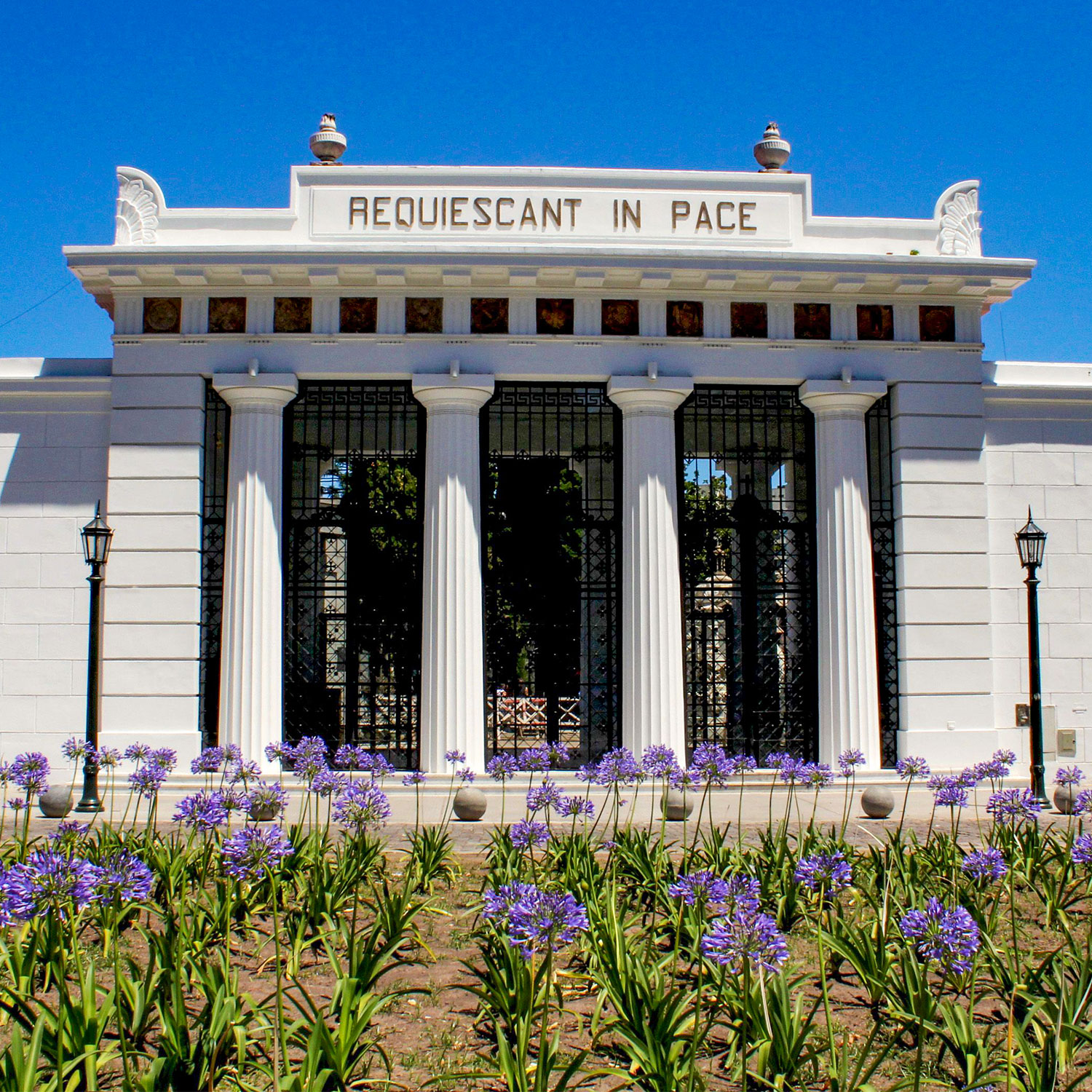
The Recoleta Cemetery of Buenos Aires

The cemetery entryway - "Rest In Peace"
El Cementerio de la Recoleta is one of the most beautiful and unique cemeteries in the world. It covers 14 acres in one of the oldest and most exclusive neighborhoods in Buenos Aires, where it's been in use for almost a century.  According to the official statistics there are 4,691 above-ground vaults; 94 of them are National Historical Monuments. Among those buried here are many former presidents of Argentina, military leaders, scientists and educators, Nobel Prize winners, and other notable personalities. And of course the most famous of all, Eva "Evita" Duarte Perón (but not her husband Juan Perón).

It's utterly fascinating to wander around and view the variety of monuments and mausoleums. Some are exotic and ornate, resembling mini churches; some are more simple, and others are falling into disrepair. Many have visible above-ground coffins, but many others have a room that leads to under-ground crypts where the coffins are.


Tuesday, December 10, 2019

Wheelchair interviews in Argentina

Our journey through Argentina during November and December gave us the opportunity to visit a number of wheelchair recipients and do follow-up interviews. One of our missionary responsibilities is to interview about 10% of those who receive chairs from the Church, at least 6 months after they receive the chair, to make sure that the process of distributing the chairs by our partners follows the guidelines set by the Church and that the chair is functioning well for the recipient.  We ask a series of questions to make sure the person was not charged for the wheelchair, that they were given the proper training on how to use and care for the chair, etc.

It's absolutely fascinating to meet with these people. They are usually very gracious and willing to talk to us. Most of them would never be able to afford a wheelchair of this quality, so the gift to them is truly a blessing. Each is unique in their needs and circumstances; we love the chance to learn about them and give them encouragement.

Sunday, December 8, 2019

Three hospital deliveries

Map of our journey. Click to enlarge.
On Wednesday November 27, Sister Kenison and I embarked on a journey through central Argentina. By the time we were done, we had driven almost 3500 kilometers (2200 miles) in 10 days! It was an exhausting marathon, but we accomplished a lot and learned good things about our service opportunities in the process.

The main purpose for the trip was to participate in three hospital deliveries, in the cities of Mar del Plata, Bahia Blanca, and Neuquen. All of these were to large public hospitals, which often struggle to operate under limited budgets and overwhelming patient loads.

We also took advantage of the trip to meet with stake presidents along the way to prepare for future projects, and to perform a number of follow-up wheelchair interviews.

Sunday, November 24, 2019

Wheelchairs in Paraguay, part 3 - "One by one"

My previous two posts described the process of wheelchair distribution that we have begun to discover here in our mission. There was one experience in today's wheelchair event that, to me, expressed beautifully the spirit of the work that were are privileged to be involved in. It spoke to the balance between efficiency and personalization. It reflected the principle that each and every soul is worthwhile and valuable in God's eyes, and therefore should be valuable to us.

The efficiency of the event exists in asking the recipients to come to a central place to be evaluated. That is sometimes difficult for them, but they are willing to sacrifice in order to get a top-quality wheelchair at no cost to them.

Today we were asked to make an exception.

Wheelchairs in Paraguay, part 2 - Fundación Solidaridad

The second part of our week in Paraguay we switched to working with a second partner, Fundación Solidaridad. This group is an NGO (non-goverment organization), so we saw the contrast between them and the government-sponsored SENADIS. They have better facilities and a broader outreach. They invite patients to pay for services when they are able, but have funds available to help those who are not able to pay. In general the care level is a step up, and their vision of helping and making a difference is inspiring.

Instead of requiring everyone to come to the central office, as is the rule for SENADIS patients,
Solidaridad has developed a great way of sharing wheelchairs in remote areas that they call a "jornada." They pick a city or area in the country where a need exists. They then work with the government agencies and health care professionals in that area to find candidates. Normally about 40 or 50 patients can be helped at a time. The local workers select the most needy candidates in the area and schedule them to come to a central location for a 2-day event. We were able to go with Solidaridad on a jornada to a city called Caacupé, about an hour east of Asunción.

Wheelchairs in Paraguay, part 1 - SENADIS

Church-donated wheelchairs
in a warehouse in Paraguay
We are just back from spending a fascinating week in Paraguay (Nov 18-22). The work in that country isn't directly part of our official "stewardship" at this point. In the past, the missionaries assigned to our position have covered projects not in just Argentina but also Paraguay and Uruguay. However, earlier this year a local, native service missionary couple were called in each of those countries to take over the duties. The situation in Paraguay is currently complicated by having lost that couple (called to serve in the temple presidency), so the future needs are uncertain.

Meanwhile, there is a good amount of catch-up work to be done, so we were in Paraguay to be trained by a visiting wheelchair project coordinator visiting from SLC.  We may need to return again to help with getting caught up. The wheelchair project is one of six "major initiatives" in the LDS Charities worldwide outreach. As missionaries serving in the field, we don't define or administer the programs that occur in our countries; but we do a number of things to support them.